01
Systems I can build and keep under control
This is not just about installing technology. What matters is that people can work, data stays safe, outages do not last longer than necessary and operating costs make sense. The solution may include servers, networks, backups, monitoring, security, CCTV, access control and purpose-built web or intranet tools. When data, reports or operational tasks are still processed manually, suitable automation can speed up the work, reduce errors and gradually repay the development cost. The key is to understand the real operational problem first - and only then choose the technology that solves it.
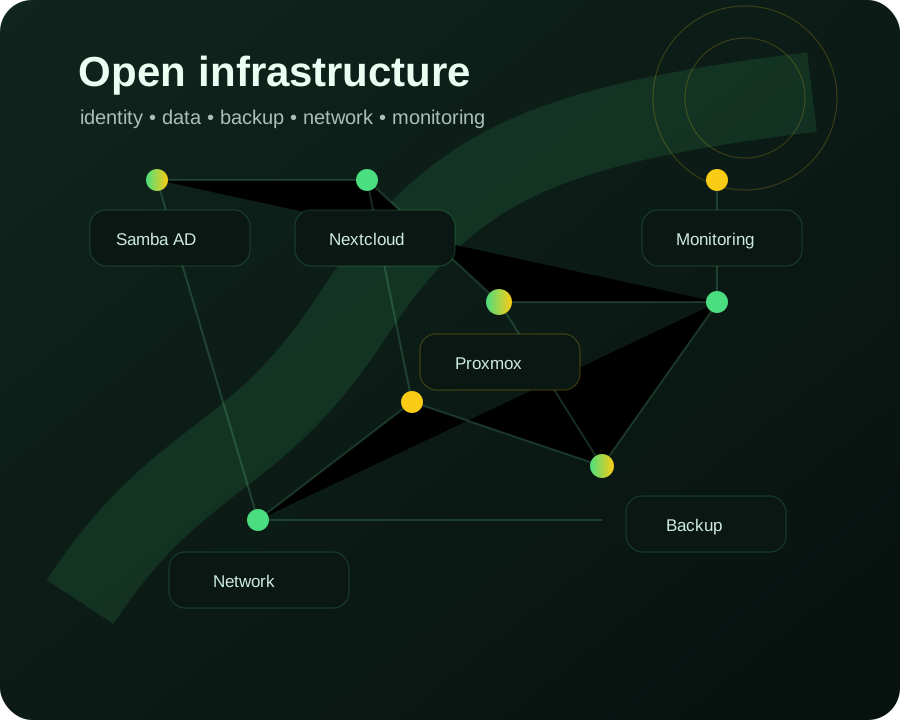
A server should not be a black box that stops the organization for days when it fails. I design environments so services can be separated, backed up, versioned and restored quickly when something goes wrong.
Technical stack: Proxmox VE, Proxmox Backup Server, snapshots, incremental backups, HA scenarios, VMs and containers.
More about server management →
Users should not deal with ten passwords, and administrators should not manage access separately in every place. The goal is clear management of accounts, permissions and business data.
Technical stack: Samba AD, LDAP, shared data, file recycle bins, file versions and user/group permissions.
More about account and data management →
People expect cloud convenience: web access, mobile access, file sharing and document editing. This can also be built on your own storage and connected to existing accounts, permissions and network shares.
Technical stack: Nextcloud, OnlyOffice, external Samba storage, mobile access, a web UI and integration with the existing environment.
More about business cloud →
E-mail should deliver messages reliably, filter unwanted mail and avoid ending up in spam because of poor configuration. A properly built mail server requires ongoing management, checks and updates, not only a one-time installation.
Technical stack: Postfix, Dovecot, Rspamd, Sieve, DKIM, SPF, DMARC, ARC, SRS, antivirus checks and domain management.
More about e-mail management →
When the network misbehaves, users usually only see that “the internet” is down, the system is slow or Wi‑Fi drops out in some areas. The cause may be unsuitable cabling, weak coverage, an overloaded connection or poorly separated parts of the network.
Technical stack: MikroTik, UniFi, switches, VLANs, routing, firewalling, QoS, wireless and fibre routes.
More about network and Wi-Fi management →
A problem detected in time usually costs less than an operational outage. Monitoring helps identify full disks, unavailable services, degraded connectivity and other unusual conditions.
Technical stack: Nagios, custom plugins, logging, graphs, service maps, automated checks and scripts.
More about IT monitoring →
Well-designed network protection is not only about blocking traffic. It should prevent unauthorized access, separate sensitive parts of the operation and protect important services without making everyday work harder for users.
Technical stack: nftables, fail2ban, MikroTik firewall, service rules, network segmentation, VPN and monitoring of suspicious traffic.
More about IT security →
Data should be protected against unauthorized access, loss, corruption and user error. I cover encryption and permissions, secure storage, separated backups, monitoring of their state and a verified recovery procedure.
Technical stack: LUKS, native ZFS encryption, ACLs, separated storage, secure backups, retention rules, monitoring and recovery tests.
More about data security, backup and recovery →
From a clear presentation website to an application designed around a specific operation. I build websites, internal registers, forms, client areas, intranet tools and service integrations so they remain fast, understandable and maintainable.
Technical stack: PHP, HTML, CSS, JavaScript, MySQL/MariaDB, Bash and Python depending on the purpose.
More about websites and web applications →